
Drone Pilot Program
for High School & College Students
Explore Drone Aviation. Get Certified as a Drone Pilot from FAA.
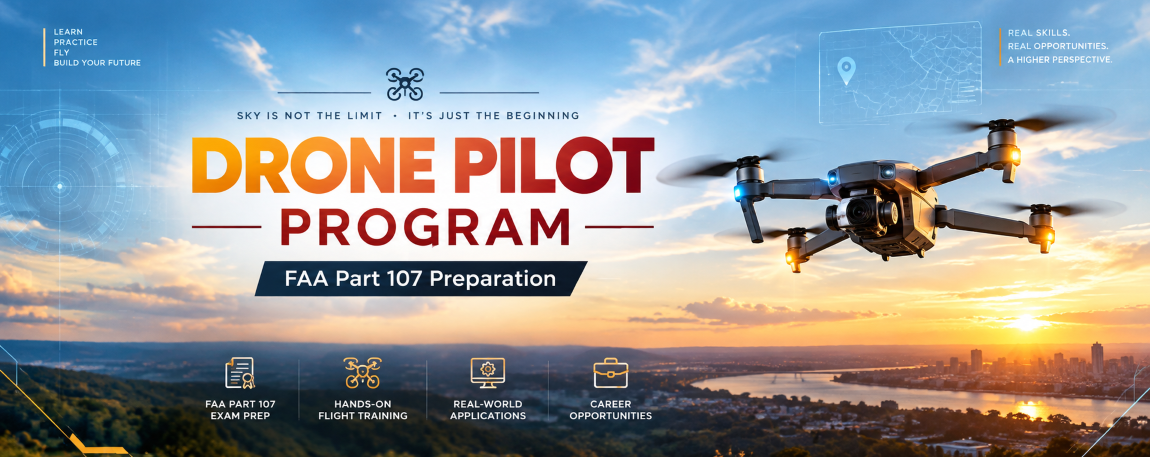
Discover drone technology, understand flight safety and airspace regulations, and develop practical mission-planning skills through iStart Valley’s beginner-friendly Drone Pilot Program.
Why Learn Drone Aviation?
Drones are transforming industries such as - agriculture, engineering, environmental monitoring, filmmaking, infrastructure inspection, and public safety. Understanding how they work can open doors to exciting opportunities in science, technology, and aerospace.
iStart Valley’s Drone Pilot Program introduces high school and college students to drone aviation, flight regulations, weather conditions, safety procedures, and real-world mission planning. The main objective of the program is to help students prepare for Federal Aviation Administration (FAA) Drone Pilot certification. Students develop a foundation in responsible drone operations while exploring how drones are used to solve practical problems.
Whether you are interested in aviation, robotics, engineering, or emerging technologies, this program offers an opportunity to explore the field and strengthen your technical knowledge and problem-solving skills.
Program Overview
This 16-week program combines foundational instruction with applied learning activities. Students begin with drone aviation, airspace regulations, weather, performance, and safety before progressing to real-world mission planning and risk assessment.
The program also introduces students to the knowledge areas covered by the FAA Part 107 Remote Pilot exam, helping eligible students prepare for the certification process.
Program Highlights
- ✔ FAA Part 107 Exam Preparation: Explore key knowledge areas covered by the FAA Remote Pilot exam.
- ✔ Drone Aviation Fundamentals: Understand drone operations, flight principles, and performance.
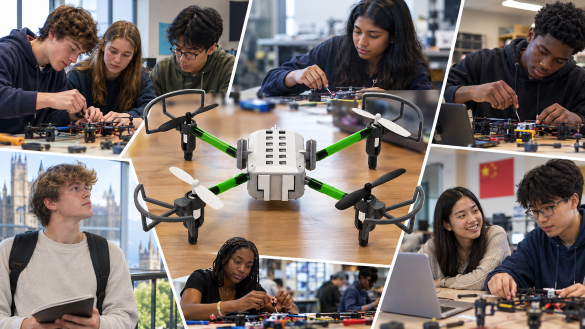
- ✔ PITSCO Drone Maker Kit Shipped to your doorstep: Design, build, test, and fly your own drone with this award-winning Engineering Project Kit.
- ✔ Airspace and Flight Safety: Learn about airspace classifications, flight restrictions, weather, and operating regulations.
- ✔ Real-World Mission Planning: Apply concepts to practical drone-use scenarios.
- ✔ Risk Assessment: Identify potential hazards and explore appropriate safety measures.
- ✔ Final Demo Day: Present a mission-planning project and receive feedback.
Note: Completing the program does not automatically award an FAA Remote Pilot Certificate. Separate FAA eligibility and certification requirements apply.
What Students Will Learn
By the end of the program, students will be able to:
- ✔ Explain fundamental drone aviation concepts and applications.
- ✔ Identify key airspace classifications and flight restrictions.
- ✔ Recognize how weather conditions affect operations.
- ✔ Understand drone performance, regulations, and safety.
- ✔ Develop structured plans for realistic drone missions.
- ✔ Identify operational risks and consider mitigation strategies.
- ✔ Present a drone mission plan and explain their decisions.
- ✔ Understand the next steps toward pursuing an FAA Certificate.
Who Should Enroll?
The program is designed for high school and college students who are interested in exploring drone technology and aviation. It is ideal for students who:
- ✔ Are curious about drones, aviation, robotics, engineering.
- ✔ Want to understand how drones are used in real industries.
- ✔ Want to strengthen technical and problem-solving skills.
- ✔ Are exploring future pathways in related STEM fields.
16-Week Curriculum
A step-by-step journey from fundamental aviation concepts to real-world drone mission planning.
Explore drone types, common applications, basic flight principles, and the role of drones across industries.
Learn about airspace classifications, flight restrictions, operating requirements, and responsible drone use.
Understand how wind, visibility, temperature, and other weather conditions can affect drone operations and flight safety.
Explore drone performance factors, operational limitations, applicable regulations, and essential safety practices. Review key knowledge areas relevant to the FAA Part 107 exam.
Apply foundational concepts to realistic scenarios. Consider mission objectives, operating environments, airspace requirements, and planning decisions.
Identify potential operational hazards, evaluate risks, and develop appropriate safety and contingency plans.
Present a drone mission-planning project, explain key decisions, and receive feedback on the final work.
What Students Receive
- ✔ 16 weeks of structured program instruction.
- ✔ Learning materials covering drone aviation, regulations, and safety.
- ✔ A Drone Maker Kit shipped to your address for hands-on drone building and engineering activities.
- ✔ Practice questions and FAA Part 107 exam preparation resources.
- ✔ Experience developing a structured drone mission plan.
- ✔ An opportunity to present their work during the final Demo Day.
- ✔ Guidance on further learning and pathways related to drone aviation.
Program Schedule & Fees
Choose Your Session (Every Saturday):
The program is delivered online. Students should select one session when registering.
Payable in installments:
Meet the Instructors

Akanksha Anand
Drone Pilot Programme Instructor | Robotics & Emerging Technologies
Akanksha Anand is an engineering professional, technology leader and educator with over 14 years of experience across software engineering, robotics, artificial intelligence and emerging technologies. She brings a multidisciplinary perspective to technical education, combining strong engineering fundamentals with a passion for making complex concepts accessible through practical, application-oriented learning.
Akanksha has completed the Commercial Remote Pilot preparation course offered by the Unmanned Safety Institute (USI), covering key areas of remote pilot education, including aviation regulations, airspace and airport operations, meteorology, aircraft performance, operational safety and aeronautical decision-making.
As an instructor for the iStart Valley Drone Pilot Programme, she helps students develop an understanding of the principles and responsibilities of drone operations. Her teaching encompasses FAA Part 107 knowledge preparation, airspace awareness, weather assessment, flight safety, risk management and real-world drone mission planning. The programme encourages students to apply their learning by developing a structured mission plan, from assessing a location and identifying potential hazards to planning equipment requirements and preparing for operational contingencies.
With professional experience in robotics development, AI and technology education, Akanksha is passionate about nurturing curiosity, analytical thinking and problem-solving skills among young learners. Her approach combines technical concepts with practical scenarios, empowering students to understand not only how emerging technologies work, but also how to use them safely and responsibly.

Navya R Nandi
Drone Pilot Programme Instructor | Robotics & AI Educator
Navya R Nandi is a technology enthusiast, developer and educator with over 8 years of experience in Robotics, Artificial Intelligence, Python programming and technology education. With a background in building intelligent systems and developing AI-driven solutions, she brings a practical, hands-on approach to teaching. She has trained students from school to college level, helping them explore technology through interactive learning and real-world projects.
Navya has completed the Commercial Remote Pilot preparation course offered by the Unmanned Safety Institute (USI), covering essential topics such as aviation regulations, airspace, meteorology, aircraft performance and flight safety.
As an instructor for the iStart Valley Drone Pilot Programme, she combines her robotics expertise and passion for teaching to introduce students to drone technology, FAA Part 107 knowledge preparation, risk assessment and mission planning. She encourages learners to think critically, understand operational safety and apply engineering concepts to practical drone scenarios.
Navya is passionate about inspiring young minds to experiment, innovate and discover how technologies such as drones, robotics and AI can solve real-world problems.
Frequently Asked Questions
1. Do students need prior drone experience?
2. Is the program suitable for high school and college students?
3. Will students earn an FAA Remote Pilot Certificate?
4. What is the minimum age for the FAA Part 107 knowledge test?
5. Is prior coding or engineering knowledge required?
6. Is the program conducted online?
7. How much time should students set aside each week?
8. What will students do during the final Demo Day?
9. What are the program dates and fees?
- Session 1: 10:00 AM – 11:00 AM CST
- Session 2: 11:30 AM – 12:30 PM CST
10. How can students enroll?
READY TO EXPLORE DRONE AVIATION?
Build a foundation in drone technology, understand the principles of safe flight, and explore how drones are used to solve real-world problems.
Join iStart Valley’s Spring 2027 Drone Pilot Program and take your first step toward exploring the future of drone aviation.
Register for the Program